
Knowledge
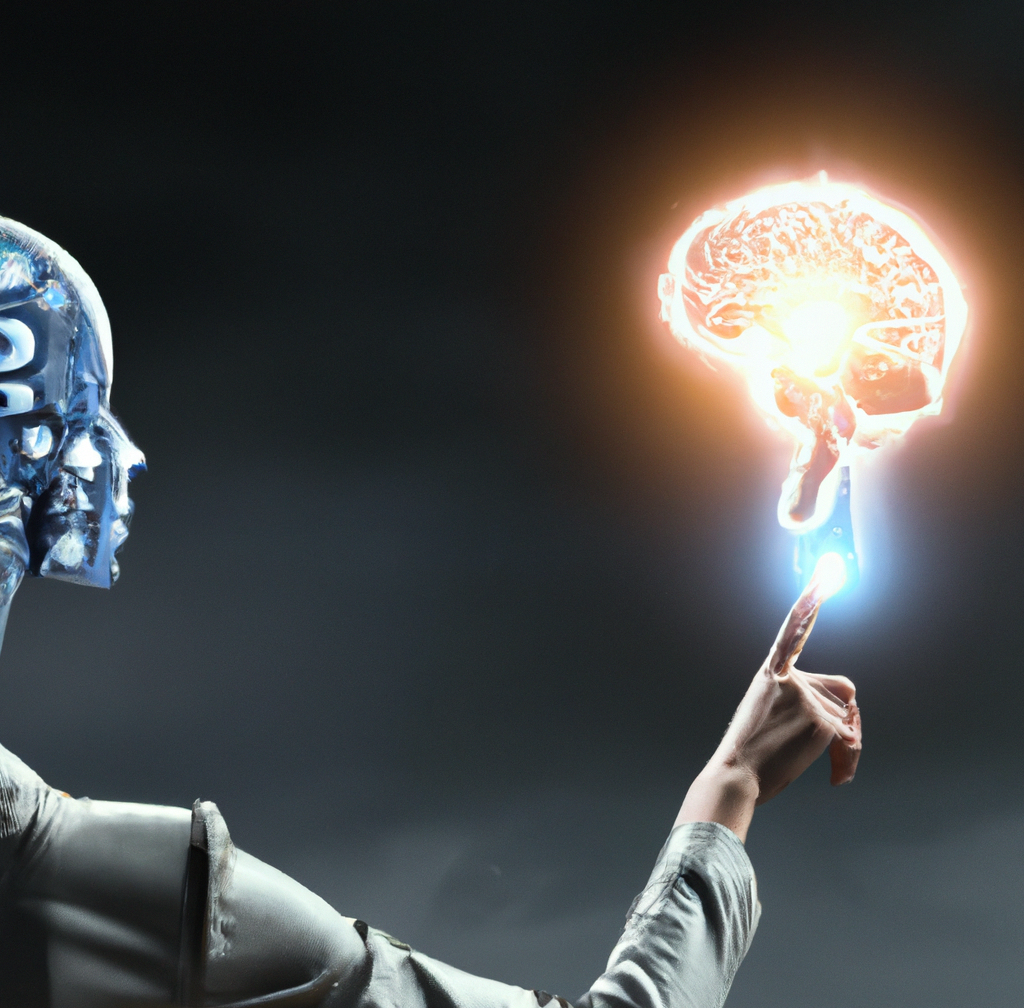

Rapid technological advancements are playing an increasingly crucial role in the workplaces of the future. Learn more about how organizations can use artificial intelligence (AI) to create more efficient and innovative workflows.
Rapid technological advancements are playing an increasingly crucial role in the workplaces of the future. Through digitalization and the implementation of artificial intelligence (AI), organizations can create more efficient and innovative workflows. It’s not just about automating tasks, but also about harnessing the power of collective intelligence and digital co-creation, where technology serves as a tool to bring together people’s ideas, insights, and skills.
Digitalization is a key factor in fostering innovation and development within organizations. By using AI, companies and teams can create a more engaging and informative innovation process [1].
Innovation is a central driving force for progress and change in society. To foster innovation, it is important to create an open and collaborative corporate culture where ideas are captured and can gain traction [2]. By fostering an open work environment, engaging customers, and establishing integrated relationships with partners and competitors, organizations can promote innovation [2]. This means that organizations become more boundary-less both internally and externally, and that the organizational structure becomes a dynamic process [3]. Managers need to build networks between internal and/or external parties and capture different thoughts and ideas in real time to foster innovation [4]. Today’s information and communication technology also enables organizations to create “communities” where employees from different units and companies can collaborate and create a dynamic process for idea generation. This fosters stronger relationships between different parts of the organization and facilitates open innovation processes [5].
There are examples of tools that help foster innovation and co-creation, and Vocean is one of them with its new AI assistant, “Vocean Copilot.” This tool enables new dimensions of co-creation in various ways. The tool is built around a methodology called the “innovation tunnel.” The tunnel consists of three steps, and Vocean Copilot assists at every stage.
Daniel Ekbom, Head of Development at Vocean, explains that Vocean Copilot has transformed how large datasets can now be synthesized, generating new insights and facilitating the development of decision-making support. The digital platform enables the inclusion of a broader group of stakeholders in idea generation, co-creation, and the prioritization of solutions, as well as comparisons between different groups. When we harness collective intelligence, we’ve seen that it also fosters a sense of participation and increases the ability to make more informed decisions across various types of organizations. It’s about letting AI support people in different ways.
In summary, we can see that AI and digitalization are increasingly shaping the workplaces of the future. By harnessing the potential of this technology, organizations can create more efficient workflows, foster innovation, and leverage the collective intelligence found in people—both internally within the organization and externally among customers, partners, and citizens.
[1] Yams, N., Bozic, V., Richardson, G., Shubina, S., Esther, Albrecht, & Gillblad, D. 2020. Integrated AI and Innovation Management: The Beginning of a Beautiful Friendship. Technology Innovation Management Review, 10(11): 5–18.
[2] Berman, S., and Korsten, P. (2014). Leading in the connected era. Strategy Leader. 42, 37–46. doi: 10.1108/SL-10-2013-0078
[3] Van Outvorst, F., Visker, C., & De Waal, B. (2017). Digital leadership: the consequences of organizing and working in a digital society. In Proceedings of the 5th International Conference on Management, Leadership and Governance ICMLG 2017 (pp. 463–471). Hogeschool Utrecht.
[4] Kodama, M. (2007). Innovation through boundary management—A case study in reforms at Matsushita Electric. *Technovation* 27, 15–29. doi: 10.1016/j.technovation.2005.09.006
[5] Henttonen, K., Pussinen, P., and Koivumäki, T. (2012). Managerial perspective on open source collaboration and networked innovation. J. Technol. Manage. Innovation 7, 135–147. doi: 10.4067/S0718-27242012000300012