Knowledge
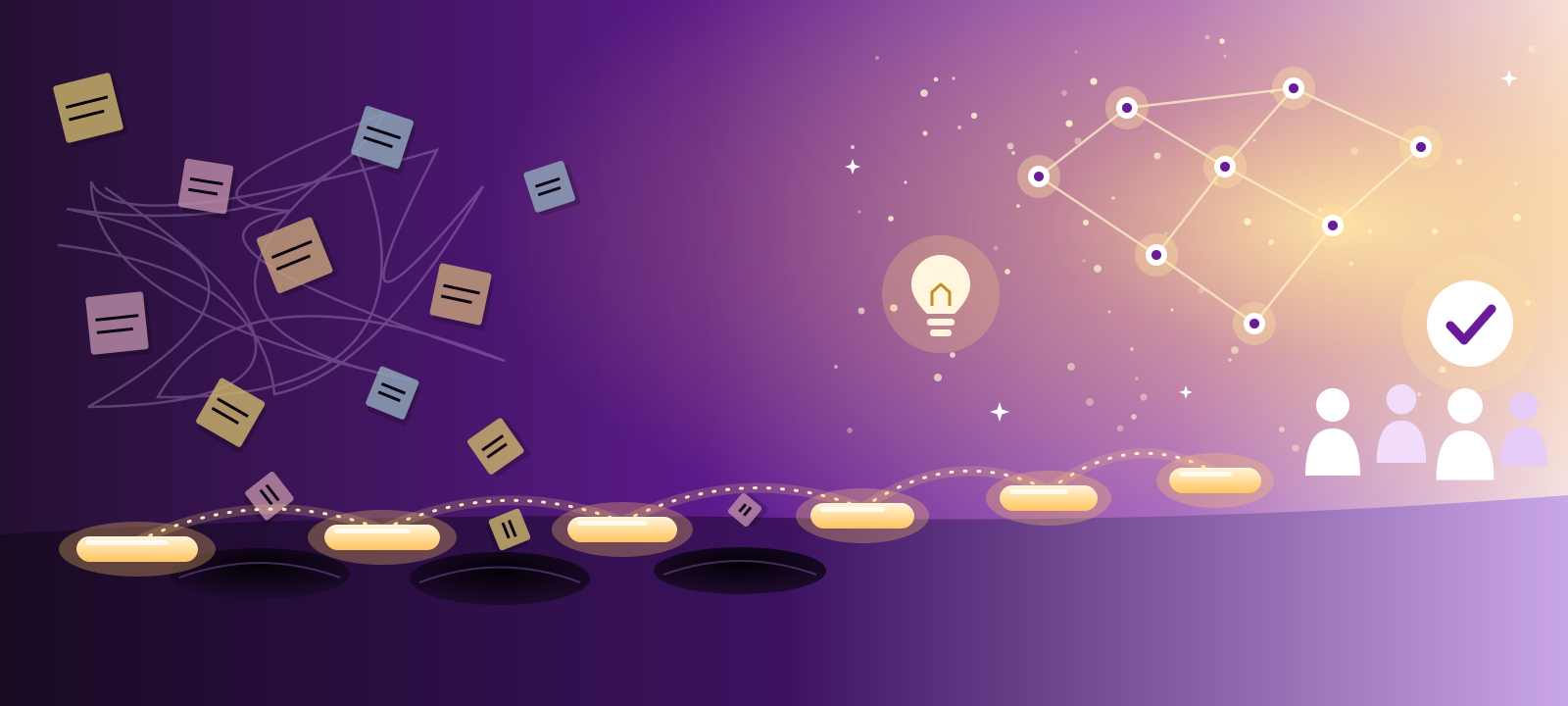

Workshops are one of the most powerful tools an organization has for gathering perspectives, making decisions people stand behind and getting everyone pulling in the same direction. Yet far too many end in a wall of sticky notes, a half-finished summary and participants wondering what it actually led to.
Here are the ten most common pitfalls, why they happen, and how to get past them.
A workshop gets booked because “we should talk about this”, without anyone defining what you're actually meant to arrive at. Without a clear purpose the discussion drifts anywhere, and participants leave the room without knowing what was decided.
A room only holds so many. So you invite “the most important people”, and lose every perspective that didn't fit – often the very people closest to the problem.
The workshop is improvised the same morning. The questions are vague, the material is missing, and the first twenty minutes go to explaining what you're supposed to do.
Everything has to fit into two hours. As a result nothing gets the depth it needs, and the most important questions are rushed through at the end when the energy is gone.
Every group has the people who talk the most and the people with the most power. Their opinions take up a disproportionate amount of space, while the quieter ones – who often hold the most important insights – are never heard.
The facilitator has to lead the conversation, take notes, keep time and make sure everyone gets a say – all at once. And when the workshop is over, hours of manual compiling await before anything becomes useful.
The workshop was lively, ideas were flowing, everyone left happy. But the weeks go by and no shared picture materializes. The discussion never turned into decision support.
Participants put time and thought into contributing – and then never hear what it led to. Next time engagement is lower, because last time felt like answering into the void.
When people are repeatedly asked to respond without seeing any results, they stop bothering. The workshop becomes yet another administrative chore instead of something meaningful.
The workshop ends, everyone goes home, and what came out of it fizzles out because nobody owns the next step. The most interesting threads – the contradictions and the unexpected insights – are left behind, precisely because they're the hardest to know what to do with. But that's often exactly where the gold is.
Vocean is built to get you past exactly these pitfalls – especially if you work with organizational development and need to run many workshops and involvement activities to produce decision support.
You formulate a challenge and an open “how” question, and then let participants set the agenda. Everyone is invited with a link, without an account, and takes part anonymously – hundreds at once, in real time. Because nobody knows who said what, the idea carries the weight, not the person behind it. Participants build on each other's contributions, and Vocean's AI analyzes everything into a shared picture and ready-made decision support the same day, with no manual follow-up work. The results are shared with everyone who took part, so the loop is closed and engagement holds next time.
And when the analysis reveals an interesting thread or a contradiction, you can point to that specific insight and have AI build a new workshop flow around it – aimed at the same group or at exactly the right people, for example only the IT department for an IT challenge. Instead of a difficult insight and a blank page, you get a way forward.
Gather → Co-create → Analyze → Share back
The most common are an unclear purpose, inviting the wrong people, an overpacked agenda, dominant voices taking over and never sharing the results with participants. Many workshops also end without decision support or clear next steps.
By letting ideas be judged on their content rather than on who puts them forward. Anonymous participation is one of the most effective ways, because it lowers the threshold for quieter participants.
Synthesize the contributions into decision support as soon as possible, ideally the same day, and share the results with everyone who took part. Also decide who owns the next step and which insights to take further.
Formulate a clear problem statement and an open “how” question, build a question structure in advance and split the process into stages such as gathering, co-creation and analysis.